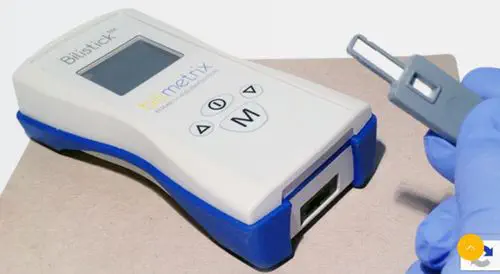
Neonatal jaundice is common and, without timely diagnosis, can lead to serious neurological complications. Measuring bilirubin is therefore an important part of clinical care for newborns.
Traditionally, this analysis uses complex and costly laboratory equipment, which may not be available in decentralised or low-resource settings.
A recent study published in Pediatric Research evaluated the Bilistick POC system, a portable device that can measure bilirubin quickly using a small blood sample, with results in under 100 seconds.
The study, conducted with 80 newborns, found a very high correlation (R² = 0.99) between device results and those from hospital analysers, with minimal bias and consistent results across operators and clinical settings.
A key part of this innovation is the data-processing algorithm, whose development included contributions from Prodigys. The algorithm supports accuracy and reliability while accounting for environmental variables, enabling portable testing without compromising quality.
These results indicate that point-of-care solutions combined with advanced algorithms can offer a practical alternative to traditional methods, improving access to diagnosis and the timeliness of care.
Prodigys’ contribution highlights the growing role of digital technologies in healthcare transformation and the potential for more accessible, efficient and distributed care models.